- Use of Smart Phones
- 25% of teenagers and young people are addicted to smartphones
- Problematic phone use has been linked to poor sleep
- School Demands
- High academic pressure
- Especially prominent in East Asian countries with competitive academic environments
- Leisure Time Activities
- Unstructured social activity can be harmful
- Structured social activity it beneficial
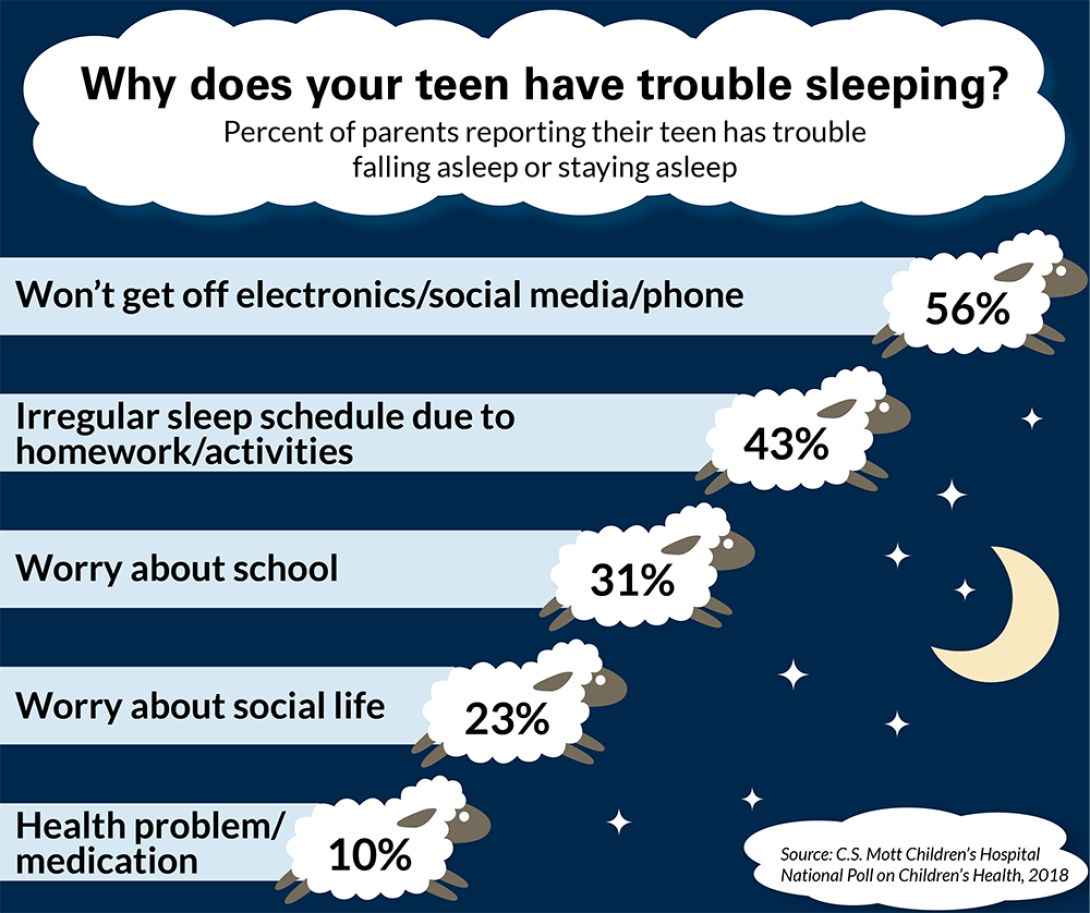
Data shows that adolescents report going to bed later as they get older. Studies from multiple countries, including Canada, Poland, Belgium, Australia, Finland, and Brazil, show similar trends, verifying that this change is likely universal. Consistent reports have also been made on teenagers going to bed later on weekend nights than sleep nights. The difference for teenagers ranges from 1 to 2 hours, and data indicates the difference is often greater in older than younger teens. Factors associated have been identified to be the following: reduced parental influence on bedtimes, increased homework, extra-curricular activities (e.g., sports, musical groups, clubs, service groups, or part-time work), and other environmental and stimulating activities (e.g., watching TV, playing video games, and using the computer).
In particular, use of smart phones significantly affects teens' sleep. Currently, 25% of teenagers and young people are addicted to smartphones (Note: weight of this evidence is from South and East Asia; levels of smartphone addiction are often higher in Asian samples than Western populations, possibly due to cultural differences). Although this by itself is quite disturbing, more disturbing is that phone addiction is linked with poor sleep. Smartphones are portable, hand-held devices. Although convenient, such high portability means they have a higher potential of interrupting sleep quality and quantity. Addiction leads young individuals to use their device for longer periods while increasing the chances of them using the device nearer to their bedtimes. This means that almost one-forth of the young population may be gravely impacted by poor sleep caused by screen usage.
Indeed, in various studies, problematic phone use has been consistently linked to poor sleep. Smartphone use has, in fact, been linked to daytime tiredness, sleep latency, and reduced sleep duration. When used close to sleep initiation, it can also delay the circadian rhythm and affect total sleep duration. Knowing or not knowing these negative effects of late phone usage, 72% of US teens report that they bring their phones into bedrooms and use them when going to bed. 28% leave phones while sleeping and report to have been awakened at night by texts, calls, or emails. 64% use electronic music devices, 23% play video games in the hour before sleep, and more than 50% text in the hour prior to sleep. Data reveals that these media using teens report poorer sleep and are less likely to feel refreshed in the morning. Exposure to lit screens at night worsens the sleep-phase delay. This happens because lit screens communicate through the retina to the portion of the brain that controls the circadian clock, telling that it is not nighttime yet.
School demands also contribute to adolescents' late bedtime. Many adolescents complain about school logistics and high academic pressure. Many of these teens struggle with the lack of time and the need to balance working hours with free time. They also procrastinate and postpone the schoolwork tasks til evening, resulting in later sleeping hours. Some state that they can focus better in the evenings and choose to do homework at that time. Several studies have confirmed the association of school pressure with sleep onset difficulties. External academic expectations from parents, teachers, and society have been said to contribute to the pressure.
Evidence from East Asian countries with competitive academic environments as well as an emphasis on academic achievements (Note: According to OECD PISA 2022, 15 year old adolescents from East Asian countries had best academic performance results and spent most time on homework among 81 countries) show that time spent on homework actually prevents adolescents from getting sufficient sleep. Intense academic stress and pressure can also lead to excessive worrying and ruminating, which lead to delayed sleep latency time.
Furthermore, leisure time activities have been identified to lead to late bedtime. Adolescents mainly involve in two types of socializing activities: structured and unstructured. According to research, unorganized leisure time activities are reported to be time-consuming and are the main reason why adolescents postpone their homework and other leisure activities til the evening. For instance, online socialization with peers, a popular, unstructured leisure time activity among adolescents often leads teens to sacrifice sleep to connect with friends. Similar unstructured activities such as hanging out, meeting friends, and social networking have been associated with sleep onset difficulties, poorer sleep quality, and insufficient sleep in teens.
On the other hand, participation in organized leisure time activities is associated with lower levels of school stress, better academic achievement, well-being, and less problematic screen usage. It also builds supportive social networks and develops goal-oriented and self-control skills, which are skills linked with prioritization of sleep and good time management. Overall, it indirectly influences quality of sleep, improving it significantly while enhancing perceived school experience. As a result, adolescents are highly encouraged to participate in these activities.