- Caffeine
- Caffeine is an adenosine-receptor antagonist
- Caffeine reduces feelings of sleepiness and fatigue
- Sugar
- Irregular sleep habits overstimulate appetite
- Sugar consumption causes poor sleep
Caffeine and sugar have become a part of our daily lives. Really, there likely won't be a single person around us that does not regularly consume either of these or even both. Numerous different foods and beverages contain alkaloid caffeine. For instance, coffee, tea, coke, ice tea, chocolate, and energy drinks all contain caffeine. In fact, it is almost impossible to not consume these on a regular basis. Regular caffeine consumption in young people including adolescents have also been observed, reflecting on this recent trend. Aligning with such trends, reports and statements on how unhealthy these are to your body and sleep have flooded us. However, though most of us are aware that they are both bad for our sleep, rarely are we fully knowledgeable about the "how." So let us ask… How do caffeine and sugar affect our sleep?
Let's start with caffeine. Caffeine is an adenosine-receptor antagonist, meaning that it sits on adenosine receptors (hence the label "antagonist"). It primarily acts on A1 and A2A receptors, which are related to functions of the brian associated with sleep, arousal, and cognition. As an antagonist, caffeine prevents adenosine from binding, reducing feelings of sleepiness and fatigue. This is why many students consume energy drinks days while cramming for exams and most adults habitually drink coffee every morning. Once in our systems, caffeine is absorbed in the stomach and the small intestines. The absorption takes place quickly and efficiently, but it is highly dependent on the variable half-time. Variable half time means that different individuals take different lengths of time to break down caffeine. This is due to endogenous factors (relating to inside the body. E.g., genetics, liver enzymes, age, hormones) and exogenous factors (relating to outside the body. E.g., medications, smoking, sleep patterns). For example, the exogenous factor of nicotine use can increase metabolic speed of caffeine by as much as 50%.
Unfortunately, caffeine doesn't just make us focus better. It has residual impacts on us. It can take up to 20 hours (or equal to ⅘ half-lives_ for effects of caffeine tolerance to wear off, and side effects entail sleep deprivation, which brings the risk of poor performance. According to cross-sectional research conducted by Pecotic et al, those who consume more caffeine report having greater trouble staying awake. This may sound ironic, but caffeine may equally be a response to fatigue as a cause of it. Caffeine may contribute to sleep quality by impacting sleep pressure. Even low doses of caffeine have been found to reduce SWA at the beginning of the night for adults. This can impact the build-up of sleep pressure. Since caffeine takes some time to wear off, SWA is generally affected by both caffeine intake directly before sleep and also caffeine consumed in the morning of the same day (before sleep). Furthermore, the stimulant effects of caffeine can alter sleep continuity by reducing sleep efficiency and increasing sleep latency.
In adolescents, the impact of caffeine is similar to that on adults. High caffeine intake is associated with an increase of reported sleep difficulties, sleep disturbances, and morning tiredness. Regular caffeine consumption in young subjects is also associated with later bedtimes and shorter sleep duration, factors connected to poor sleep. It also reduces SWA and alpha activity, which mean reduced sleep depth. Such reductions have been most strongly observed over the prefrontal, central, and occipital regions. Consistent with observations in adults, caffeine leads to SWA reduction mostly at the beginning of the night.
Although not as often discussed as caffeine, there is evidence that consuming more sugar leads to more restless and disrupted sleep. As a result, it is equally important to learn the effect of sugar on sleep quality. A 2016 study found out that volunteers who consumed diets with more sugar took longer to fall asleep and spent less time in deep sleep (SWS), a crucial stage for the body's physical restoration and healing as well as for maintaining healthy metabolism and the immune function. These led to restless sleep and frequent awakenings throughout the night. Additionally, some sugary treats also contain caffeine, further interfering with rest.
Eating sugar is pleasing and satisfying because it activates the brain's reward circuitry and complex web of hormones (that are related to hunger and metabolism). When we eat sugar, the brain releases dopamine, which in turn delivers powerful feelings of pleasure and satisfaction. Unfortunately, the more sugar we eat, the less sensitive our brains become to the dopamine rush. Consequently, to feel the same feeling of pleasure and satisfaction, we need to produce more dopamine. This often leads people to eat more sugar for that same pleasure.
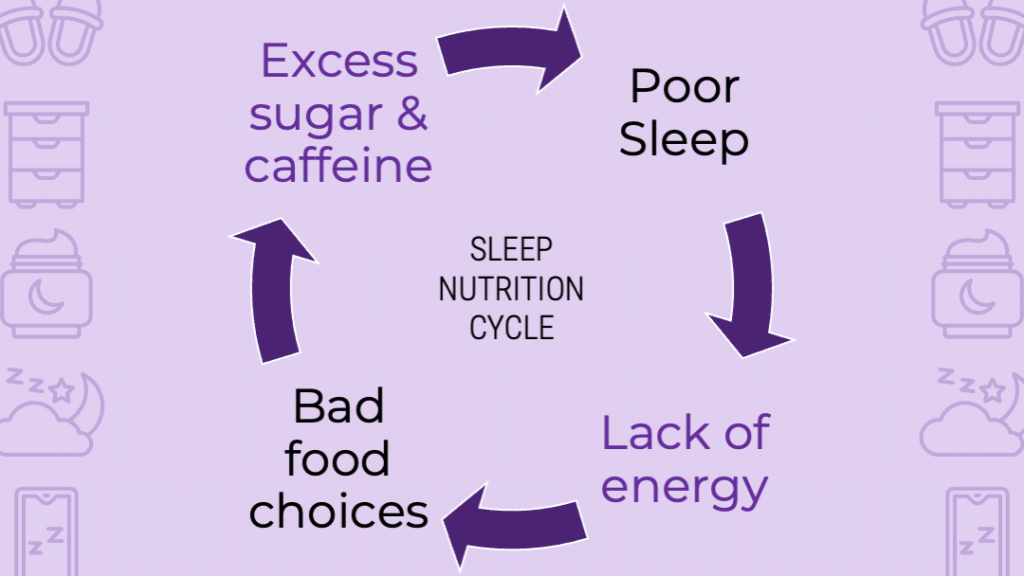
Sugary foods cause cravings while reducing the effectiveness of hunger-suppressing and metabolism-regulating hormones. Cravings typically lead to late-night eating and ultimately disrupt sleep; poor sleep worsens sugar cravings. Hence, an irregular sleep habit can create a cycle of disrupted sleep and overstimulated appetite, negatively affecting health weight gain, prediabetes, diabetes). Furthermore, poor sleep caused by sugar consumption can interfere with the normal production and function of hormones, including leptin, ghrelin, and insulin (Note: insulin is a hormone that acts as a key regulator of blood sugar).
Both sleep and inflammation are regulated by circadian rhythms. Poor sleep increases chronic inflammation, which significantly contributes to disease. Similarly, systemic inflammation can also undermine healthy sleep. Diets high in sugar increase chronic inflammation. Sugar contributes to the formation of harmful biochemical components which foster inflammation. Sugar and refined carbohydrates also negatively impact gut bacteria by causing unhealthy, inflammation-boosting changes. This can pose a serious problem as gut bacteria are key regulators of overall health. Additionally, sugar elevates cholesterol, overall increasing inflammation.
For those interested, here is some extra information on how inflammation worsens sleep in the first place. Inflammation comes with cytokines, which are chemical messengers that regulate sleep. More cytokines lead to sleep issues such as insomnia. Inflammation can also create pain and stiffness in the body on its own, which collectively make good quality sleep difficult. Lastly, inflammation involves higher levels of cortisol, a hormone that stimulates alertness. This can lead to feelings of stress and cause poor sleep.