
- Screen Time: Exposure to light before bed may lead to poorer sleep
- Increased lighter sleep stages
- Decreased deep sleep (SWS)
- Diet: Different foods may affect sleep quality
- High-Carbohydrate (HC) diet may lead to poorer sleep
- High-Fat (HF) diet may also lead to poorer slee
- Exercise: Physical activity may improve sleep
- Aerobic exercise can enhance sleep
Let us first learn about how lifestyle habits such as screen time, diet, and exercise affect sleep quality. Most people nowadays have scrolled through their phone right before bed, at least once. In fact, you probably have done so as well. You might have noticed that after a night like that, you feel groggier in the morning than usual. This is not a random phenomenon. Indeed, researchers have noticed that evening exposure to light from computer screens and electronic devices disrupts sleep continuity and quality. Exposure to light before bed has been associated with lengthened sleep latency, reduced sleep duration, and increased number of nocturnal awakenings. Changes have also been observed in sleep stages. The most pronounced effects have been seen in NREM sleep; lighter sleep stages increased, while deep sleep (SWS) decreased. This means that usage of screens in the evening negatively affects your overall sleep quality by reducing the stage (SWS) that helps your body recover and refresh for the morning. Many studies have verified these findings, presenting that excessive smartphone usage is a factor contributing to adverse sleep quality.
Why does this happen? Scientifically speaking, it is caused by the blue light from the LEDs. Light suppresses melatonin secretion in humans (Note: melatonin is a hormone that induces sleep–for more information, refer to the sleep biology webpage). Humans have the strongest response (greatest reduction in secretion) for the short-wavelength portion, which appears blue (thus the name, blue light). Supporting this idea, blue monochromatic light has been said to be more effective than longer-wavelength light for enhancing alertness. As a result, risk factors of exposure to blue light in the evening include disturbed circadian rhythms and sleep loss. These risk factors collectively and negatively contribute to sleep quality.
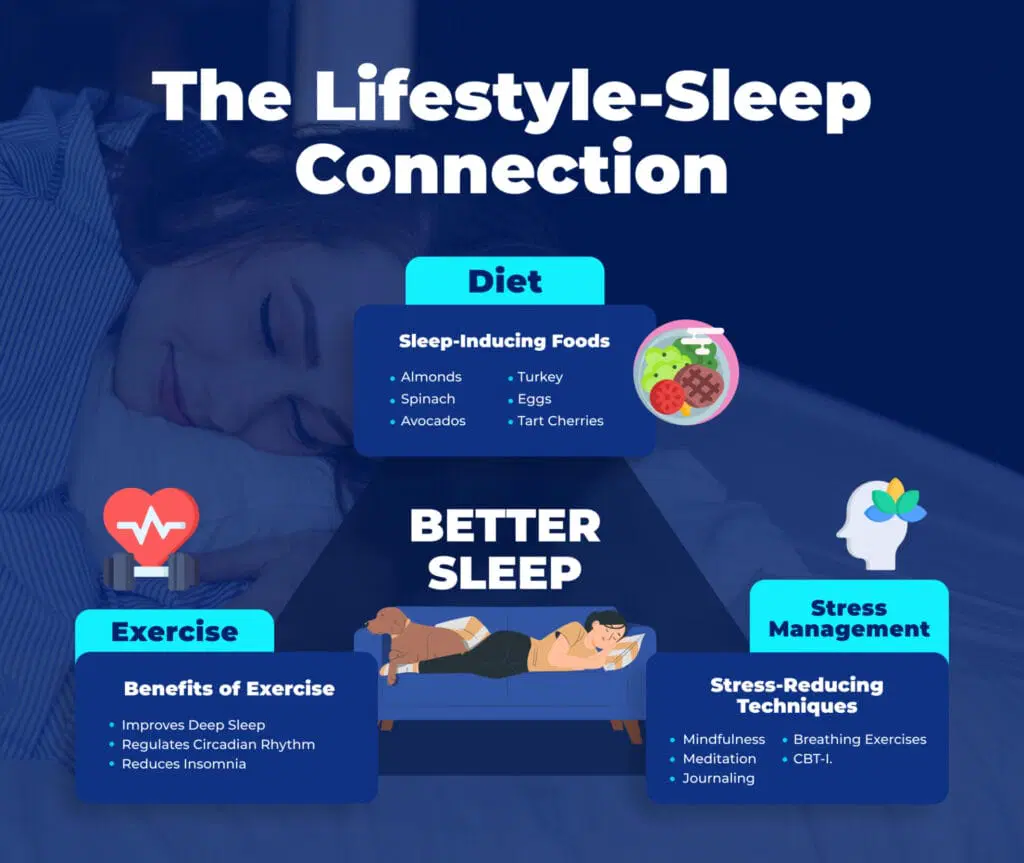
Although definitive conclusions have not been drawn yet, diet is also speculated to affect sleep quality. Researchers studying the correlation between different food types and sleep quality across various cases have made several suggestions for the health of the general public. They recommend the general population to increase their fruit and vegetable intakes, choose whole grains (higher in fiber), and favor vegetable oils. Research paper "Effects of Diet on Sleep Quality" has concluded that "dietary patterns that favor HC intakes are associated with reduced SOL and SWS and increased REM." HF intakes have been associated with "lower SE and REM and higher SWS and arousals." They also suggest that "some foods, such as milk products, fish, fruit, and vegetables, also show sleep-promoting effects." However, they point out that studies have been too diverse, short, and small to conclude definitively. (Note: HC refers to High-Carbohydrate diet, and HF refers to High-Fat diet).
Additionally, physical activity has been discovered to improve sleep. Although researchers do not completely understand why this happens, they have concluded this to be a fact. Moderate aerobic exercise increases the amount of SWS (deep sleep, considered a chance for the brain and body to rejuvenate–for more information, refer to the sleep biology webpage). Exercise has also been found to help stabilize mood, positively impacting mental health.
There are some meaningful connections that can be made between working out and its effects on the body as well as sleep. To begin with, aerobic exercise causes the body to release endorphins. These endorphins create a level of activity in the brain, which can keep some individuals awake (depends on the person). Researchers suggest these people do exercise at least 1-2 hours before bed so that they can get wind-down time for good sleep. Secondly, exercise increases core body temperature. Increase in body temperature signals the bodyclock that it is time to be awake. However, 30-90 minutes after exercise, the core body temperature starts falling. This facilitates sleepiness. Researchers state that optimal time to exercise depends on the individual. What applies to most is that engaging in at least 30 minutes of moderate aerobic exercise may positively influence sleep quality. Elevated heart rate, in fact, creates biological processes in the brain and body that contribute to sleep of better quality.