
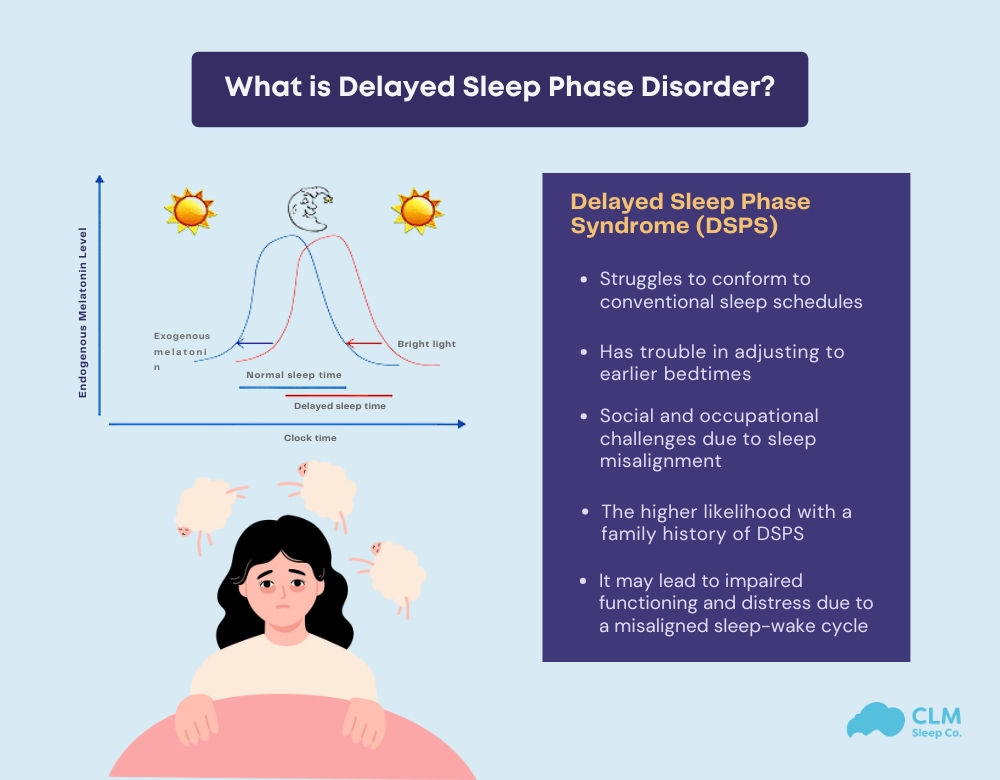
- Delayed Sleep-Wake Phase Disorder (DSWPD)
- Common issue in teens
- Prevalence is as high as 14% among adolescents
- Can cause sleep deprivation, which leads to mood swings and low energy
- Related to circadian rhythm
Let's first delve into how teens' bodies change from a biological aspect. The delayed sleep-wake phase disorder (DSWPD) is one of the most common problems in teens. Indeed, studies show that prevalence as high as 14% in the adolescent population. DSWPD can cause sleep deprivation, contributing to problems with focusing, mood swings, and low energy. Although the causes of this disorder are not clear, speculations have been made surrounding what plays a role.
Firstly, the circadian rhythm has been identified. The circadian rhythm tends to shift later during puberty. This is because the brain releases melatonin later in the evening than it would for a younger child or older adult. This can cause teens to sleep later than when they were younger. Secondly, genetics contribute to the development of the disorder. Research has found out that teens are more likely to develop the disorder if a parent had it. Thirdly, teens' social life can play a part. Many teens choose to stay up late and chat or hang out with friends. This can cause them to sleep later. Lastly, bright lights/blue light from electronic devices can negatively affect bedtime. Many teens use devices in the evening, and this can keep them awake past their ideal bedtime. Additionally, lack of exposure to bright light early in the morning can impact the circadian rhythm and lead to late bedtimes.
However, teens are not the only ones that can be diagnosed with this disorder. Individuals working during night shifts, traveling across time zones, and consuming too much caffeine can also experience it. It is simply that it may be more common for teens to have these disorders due to biological shifts and habits. The problem becomes less prevalent as this population of teens age as teens' circadian rhythms shift earlier as they reach young adulthood.
To discuss the changes in circadian timing during puberty in detail, the circadian system is stabilized at around 6 months of age. It remains mostly unchanged until puberty. Once puberty starts, a natural delay in sleep phase is observed and teens stay up later at night and wake up later in the morning. Such intrinsic circadian changes, coupled with pubertal hormonal changes and increased light sensitivity can overall cause the delayed sleep phase. For example, during puberty, the hypothalamic-pituitary-adrenal axis (plays a big role in energy regulation and stress response) is affected. Some research has also provided evidence that teens are relatively sensitive to evening light.